 Go to Cajun Coyote Media
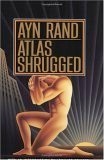
I’m not going to argue whether Rand wrote speculative fiction, since the reason I decided to read Atlas Shrugged was purely hubris. It’s considered one of the most important works in the past century and I didn’t think it’d take me too long to read (did I mention hubris?) After all, during one high school semester I voluntarily read Anna Karenina, War and Peace, and several other established works of Russian Literature. I bring up that young reading fad because I think there’s similarities between Tolstoy and some 20th century epic fantasy: casts of thousands, multiple subplots, fatalistic character flaws, epic feel, and so on (but suggesting this similarity nearly got me kicked out of a critique group). In reading Rand, I was again reminded of Tolstoy, particularly since both authors have axes to grind. Tolstoy has troubled characters who discover peace by working in the fields with the "happy" peasants, while Rand shows her characters being sucked dry by non-productive "looters" and establishing their own secret paradise where they can work and create in peace.
Rand builds a realistic America where one isn’t allowed to over-achieve, many expect paychecks for doing little or no work, and industry can’t function under governmental restraints. When all the creators and achievers and just plain competent workers start deserting, we find that these desertions are a scheme started by a man called John Galt. His plan is successful and society eventually grinds to a halt.
I thought this novel, published in the fifties, would feel dated. But it didn’t, which was very, very scary. Consider what we do today to equalize achievement, described in the WSJ article titled "Most-Praised Generation Craves Kudos at the Office" or the movie The Incredibles ("if everybody’s special, then nobody’s special"). Take a look at the grade inflation/leveling that occurs in our education. (Aside: about ten years ago I was teaching undergraduate computer programming for a university that originally catered to older employed students. When the university started attracting younger students, I began to experience grading issues. Example: a girl came to me crying, literally, because she got an 87% on the first test and wanted it regraded. Since the test questions were absolute/multiple-choice answer, I couldn’t “interpret” a better grade. She looked at me strangely, tears still in her eyes, when I pointed out that there’d be two more tests and she’d already gotten 100% on her first lab. She might certainly get an A in this class, but I couldn’t guarantee it. Within the week, she’d dropped my class, for reasons that I’m just not wired to understand… A semester later, the Dean warned me that my classes were too “difficult,” even though the average final grade in my classes had climbed to an A-minus. I figured it was time to quit teaching; if I was going to be the only one who identified the good students, why bother?)
As for Atlas Shrugged, I admit my reading muscles have become flabby and by the time I hit John Galt’s 50-page-plus rant late in the book, my eyes glazed over and I skimmed. Other than the rants, Rand was an excellent writer and I learned quite a bit by reading this book. First, my biggest nitpick: she ensures the reader gets close to several characters who move the story, then expects that the admiration (or fear) that these characters have for John Galt will transfer over to the reader. It didn’t, in my case, but her character development and motivations were excellent for the characters whose points of view carry the story. Rand makes politics, industry, and business, as evidenced through small petty minds and private conversations, feel EPIC. How the heck does she do that? I think it’s a combination of her voice and many interacting character arcs. Her descriptions aren’t mundane visual references; they always evoke character. For instance, when Dagny’s brother is looking at her after she’s returned from a trip:
He sat studying her silently. Her slender body, about to slump from exhaustion, was held erect by the straight line of the shoulders, and the shoulders were held by a conscious effort of will. Few people liked her face: the face was too cold, the eyes too intense; nothing could ever lend her the charm of a soft focus. The beautiful legs, slanting down from the chair’s arm in the center of his vision, annoyed him; they spoiled the rest of his estimate.
Isn’t that description marvelous? Without rattling off eye color, hair color, clothes, etc., Rand has told us much about the character under observation, as well as the observing character. This is early in the novel and one can tell that Dagny’s brother has conflicting opinions of her, for reasons that are hinted at within this description.
You don’t have to agree with Rand’s philosophies to enjoy her characters and story (as with Tolstoy). Atlas Shrugged is full of excellent examples for writers that would like to improve their craft. Additionally, it contains a chillingly relevant model for screwing up society’s industrial cogs and gears.